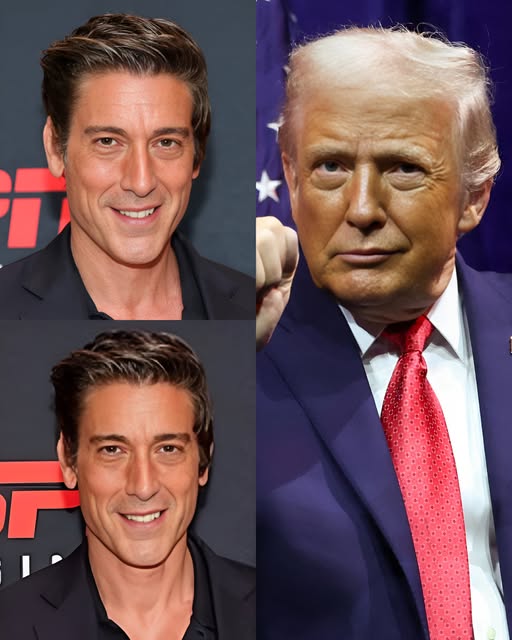
The command came abruptly, cutting across the chamber like a dropped glass, as Donald Trump gestured toward security and demanded David Muir be escorted out immediately.
Staffers froze mid motion, unsure whether to follow protocol or pause for clarification, while cameras swung instinctively toward the unfolding confrontation.
The room filled with overlapping murmurs, not outrage yet, but confusion sharpened by the realization that this was happening live and unscripted.
Muir rose from his seat slowly, not defiant and not flustered, but composed in a way that felt deliberate rather than reactive.

He did not argue the order, did not appeal to the audience, and did not raise his voice to reclaim control of the moment.
That restraint alone unsettled the atmosphere, because television expects escalation, and escalation never arrived.
Security personnel stepped forward hesitantly, exchanging brief glances that suggested uncertainty about timing and authority.
Before anyone could place a hand on his arm, Muir reached into his folder with a measured calm that redirected every eye in the room.
The movement was small, almost casual, yet it immediately shifted attention from force to anticipation.
When the document emerged, the air changed, as if oxygen had thinned and sharpened simultaneously.
Trump’s expression tightened, confidence compressing into calculation as he recognized something he had not prepared to confront publicly.
The murmurs grew louder, rippling outward as viewers sensed a pivot unfolding in real time.
Security paused, caught between an order issued moments earlier and a new uncertainty introduced by the paper now visible.
Muir did not brandish the document theatrically, nor did he rush to explain its contents.
He held it steady, allowing the implication to speak before any words followed.
The chamber, moments earlier on the brink of chaos, settled into a tense stillness.
Cameras lingered, capturing faces recalibrating as the power dynamic subtly but decisively shifted.

What made the moment extraordinary was not confrontation, but contrast, command versus composure, force versus preparation.
Observers later said the silence felt louder than shouting, because it forced everyone present to acknowledge the pause.
Trump did not repeat the order, and security did not advance, creating a suspended space where authority felt momentarily undecided.
Muir finally spoke, his tone even and unhurried, choosing clarity over volume in a room primed for spectacle.
He referenced the document without summarizing it, signaling that its existence alone changed the terms of engagement.
That choice reframed the moment from removal to revelation.
Staffers who moments earlier appeared frozen now leaned forward, tracking every word with heightened attention.
The audience, both in the room and watching remotely, sensed the gravity of an unexpected turn.
What unfolded next was not a takedown, but an exposure of preparedness versus impulse.
Muir explained why the document mattered procedurally, grounding the exchange in process rather than provocation.
By doing so, he shifted the conversation from personalities to accountability.

Trump listened without interrupting, an absence that viewers quickly noticed and began commenting on online.
The silence from security became its own statement, a recognition that the calculus had changed.
Producers backstage reportedly debated whether to cut away, ultimately choosing to preserve the moment intact.
Clips began circulating within minutes, looping the precise second when the document appeared and the room recalibrated.
Social media reactions polarized instantly, with some praising Muir’s composure and others questioning the appropriateness of the reveal.
Yet even critics acknowledged the effectiveness of preparation meeting pressure.
The phrase power dynamic flipped trended alongside short clips showing security hesitating mid step.
Media analysts later described the moment as a case study in how readiness can neutralize force without confrontation.
Muir’s refusal to dramatize the reveal amplified its impact.
Instead of escalating, he decelerated, forcing the room to match his pace.
That deceleration deprived the order of its momentum.
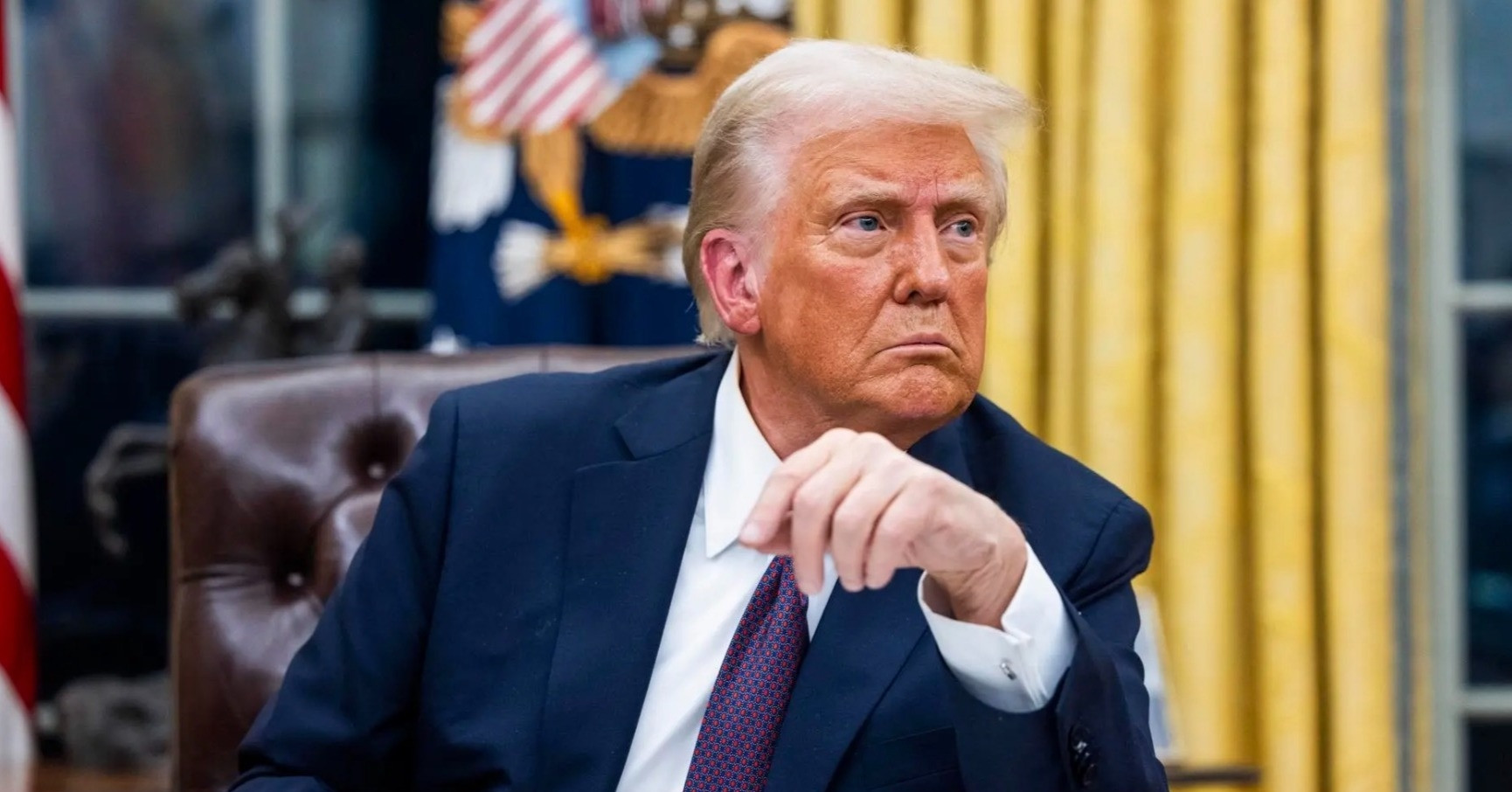
Trump’s posture shifted, signaling recalculation rather than retreat, a subtle but telling change captured on camera.
The exchange highlighted how authority relies not only on commands, but on conditions that allow them to proceed.
When those conditions change, commands can stall.
Muir’s calm presence reframed the narrative from removal to legitimacy.
The document’s specifics remained secondary to its timing and presentation.
Viewers debated endlessly what the paper contained, but many agreed the moment worked because of when it appeared.
Preparation, in that instant, outperformed aggression.
The chamber’s reaction reflected a broader public fatigue with spectacle over substance.
Instead of cheering or jeering, the room absorbed the shift quietly.
That quietness traveled online, where commentary focused on process, not theatrics.
Supporters praised the segment as a reminder that journalism can assert itself without shouting.
Critics argued that journalists should never place themselves at the center of events.
The debate itself underscored how unusual the moment felt.

Muir did not claim victory, nor did he frame the exchange as a personal stand.
He framed it as responsibility meeting resistance.
That framing insulated the moment from accusations of grandstanding.
The segment continued with measured discussion, but the energy never returned to its earlier volatility.
Security remained in place yet passive, an emblem of authority deferred rather than deployed.
Trump addressed the document indirectly, choosing caution over confrontation.
The decision suggested recognition that escalation could backfire under scrutiny.
Viewers replayed the clip repeatedly, focusing on body language rather than dialogue.
The slow rise from the chair, the steady reach for the folder, the pause before speaking.
Each detail contributed to a moment that felt meticulously controlled despite unfolding live.
Commentators noted that calm can function as leverage when others expect chaos.
The episode reignited conversation about press freedom, decorum, and the limits of executive impulse.
It also sparked discussion about preparation as a journalistic ethic.
Rather than reacting to power, Muir anticipated it.
That anticipation changed the outcome.
The clip’s longevity stems from its simplicity and restraint.
No shouting.
No scuffle.
Just a document and a pause that redefined the scene.
Audiences shared the moment not for shock alone, but for its implications.
What happens when authority meets readiness.
What happens when orders collide with evidence.
The exchange offered no final answers, but it raised enduring questions.
Who controls the room when information enters unexpectedly.
How power responds when momentum stalls.
And whether calm can be more disruptive than defiance.
As the broadcast ended, commentators agreed on one point.
The moment would be studied, replayed, and debated for reasons beyond politics.
It demonstrated how composure can redirect force without confrontation.
In a media landscape saturated with noise, stillness became the headline.
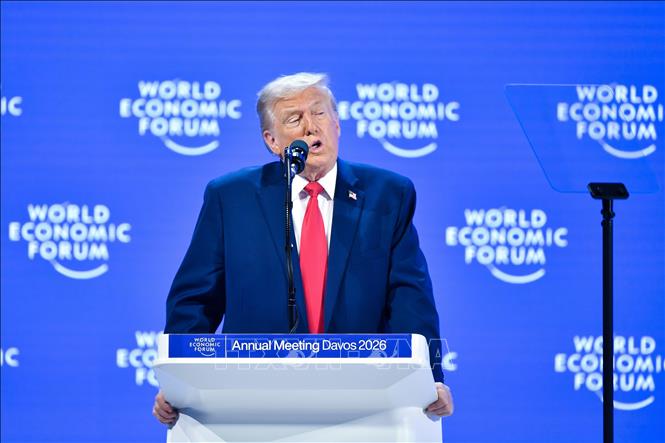
The document itself mattered, but the method mattered more.
Timing transformed paper into leverage.
Silence transformed tension into reconsideration.
And a command to remove became an invitation to reassess.
The room did not erupt again.
It recalibrated.
That recalibration is why the clip refuses to fade.
Not because of outrage, but because of control reclaimed through preparation.
The power dynamic flipped not with volume, but with readiness.
And that lesson continues to resonate wherever authority expects compliance and meets composure instead.
Note: This is not an official announcement from any government agency or organization. The content is compiled from publicly available sources and analyzed from a personal perspective.